Some Things to Understand.
First, to anyone who may have experienced the loss of a baby or child, anyone who is struggling with these questions on behalf of someone they love, or anyone who is curious about what to believe about this subject, please hear my heart in this matter. I do believe that all babies who die in infancy are secured and held by the loving and merciful hands of God. However, merely believing that your baby is in glory and has escaped the wrath of God is only a secondary path to peace.
We must rest our assurance, joy, peace, and thankfulness upon the bedrock of God Himself and His revealed word. Our experiences of grief, loss, pain, and heartache are not accidental events that we must work through alone, nor do these things catch God off guard. As Christians we can also be confident that Jesus Christ, as the perfect High Priest, is mediating on our behalf and He is able to sympathize with us.
“Therefore, since we have a great high priest who has passed through the heavens, Jesus the Son of God, let us take hold of our confession. For we do not have a high priest who cannot sympathize with our weaknesses, but One who has been tempted in all things like we are, yet without sin. Therefore let us draw near with confidence to the throne of grace, so that we may receive mercy and find grace to help in time of need.” (Hebrews 4:14-16)
Notice how Jesus can indeed sympathize with us and with our weakness. He experienced the pains and sorrows of loss. He witnessed his friend Lazarus die and He wept. He was tempted, but was without sin. He experienced the everyday life on this earth that we experience, from being tired, to being hungry, to even praying to the Father and seeking communion with Him.
Therefore, we are told that we can and should draw near to the throne of grace with confidence. Confidence that we will not only be heard, but confidence that Christ is able to guide us through our grief and bring us out on the other side.
“And He has said to me, “My grace is sufficient for you, for power is perfected in weakness.” Most gladly, therefore, I will rather boast in my weaknesses, so that the power of Christ may dwell in me. Therefore I am well content with weaknesses, with insults, with distresses, with persecutions and hardships, for the sake of Christ, for when I am weak, then I am strong.” (2 Corinthians 12:9-10)
Jesus says, “Come to Me, all who are weary and heavy-laden, and I will give you rest… For My yoke is easy and My burden is light” (Matt. 11:28, 30). Do not neglect the throne of grace, my dear friend. Doing so will only give an evanescent peace that will quickly fade, and you will once again be searching for a way out of grief.
Second, we must understand the Scriptures are silent on this issue. We do not have any explicit text or passage that would teach us some “age of accountability” or any such thing. You will not find, within the pages of Scripture, God telling us that all His little image bearers under some specified age will be safe in His arms if they die before they are more mature.
We can find clear examples of doctrinal teaching on things like the atonement, justification by faith alone, sanctification, and the deity of Christ; but what we do not find is any clear passage of Scripture that can give us a one-stop-shop answer to this important question.
What we do know are things about God’s nature; His holiness, lovingkindness, goodness, graciousness, long suffering, justice, wrath, jealousy, and harmony within the Godhead three persons in one being. What we also know are things about man’s nature, fallen in Adam, in need of a savior in Jesus Christ, who brought about the new creation as the last Adam.
I arrive at these conclusions because, despite the fact that Scripture is not altogether clear on the issue, I believe we can properly deduce these truths from the overall testimony and tenor of Scripture and the breadth of God’s redemptive plan in history. But please keep in mind the fact that we must only go as far as the Bible goes. Once Scripture makes an end of speaking, so too should we.
“The secret things belong to Yahweh our God, but the things revealed belong to us and to our sons forever, that we may do all the words of this law.” (Deuteronomy 29:29)
Third, we must understand just how emotionally charged this topic can be, perhaps even more troubling to people than the doctrine of unconditional election and limited atonement. The idea of an innocent baby/infant being subjected to the eternal wrath of God is jarring to us.
However, this discussion will not be fruitful if we allow our emotions to run wild. We have the obligation, as the ones in control of these emotions, to pull back on the reigns and slow the galloping horse of emotions down to a slow trot.
Lastly, just as a quick housekeeping note: all references and quotes from Scripture are taken from the Legacy Standard Bible (LSB) unless otherwise stated.
God, the Righteous Judge.
“Far be it from You to do such a thing, to put to death the righteous with the wicked, so that the righteous and the wicked are treated alike. Far be it from You! Shall not the Judge of all the earth do justice?” (Genesis 18:25)
Regardless of how we may feel about certain actions of God, He always does what is right. No action of His can possibly be seen as unjust or unrighteous. All Christians ought to be able to agree with this basic truth about God’s nature and character.
The Psalms are filled with these kinds of declarations of God’s goodness and how all His actions are righteous. David acknowledged that an action done by man (for example, killing King Saul) would be sinful while that same action if done by God is good and righteous.
“But David said to Abishai, “Do not destroy him, for who can stretch out his hand against the anointed of Yahweh and be without guilt?” David also said, “As Yahweh lives, surely Yahweh will smite him, or his day will come that he dies, or he will go down into battle and be swept away. “Yahweh forbid that I should stretch out my hand against the anointed of Yahweh; but now please take the spear that is at his head and the jug of water, and let us go.”” (1 Samuel 26:9-11)
I do not think that a discussion on this topic can be profitable without recognizing this. Why? Because we see examples throughout Scripture of God both directly and indirectly putting to death babies, toddlers, and children. This is an inescapable fact of the Christian worldview, and we should not be ashamed of this.
Nor should we try merely brushing it to the side by taking texts that explicitly shows God take direct action, which results in the death of babies, and saying, “Well, you see… this wasn’t really God doing that. He was just permissively letting this happen…” and many such excuses. Let the Atheist and progressive Christians cry into the ether about it; they have to borrow from our worldview to be indignant about the death of a child in the first place.
Here I stand, on the foundation of Scripture, ready to declare that God is righteous and good when He puts to death a little baby, regardless of how harsh that sounds to our human ears. The Scriptures show this happening, and we can either believe it or reject it. What we cannot do is twist and dismiss it just to keep our emotions in check.
Just to hammer this point home, here are some examples of God doing this.
The Flood.
“Then Yahweh saw that the evil of man was great on the earth, and that every intent of the thoughts of his heart was only evil continually.” (Genesis 6:5)
“Now the earth was corrupt before God, and the earth was filled with violence. And God saw the earth, and behold, it was corrupt; for all flesh had corrupted their way upon the earth.” (Genesis 6:11-12)
“And the water prevailed more and more upon the earth, so that all the high mountains under all the heavens were covered. The water prevailed fifteen cubits higher, and the mountains were covered. And all flesh that moved on the earth breathed its last, that is birds and cattle and beasts and every swarming thing that swarms upon the earth, as well as all mankind. All in whose nostrils was the breath of the spirit of life—of all that was on the dry land—died. Thus He blotted out every living thing that was upon the face of the land, from man to animals to creeping things and to birds of the sky, and they were blotted out from the earth; and only Noah remained, and those that were with him in the ark.” (Genesis 7:19-23)
We see God putting to death all peoples of the earth, no doubt consisting of newborn babies to toddlers and young children. Did those children commit the sins that their older counterparts did? We are not told, but far be it from God to put to death someone and it not be a righteous act on God’s part. If God put everyone to death, then He did so righteously.
The firstborn of Egypt.
“So Moses said, “Thus says Yahweh, ‘About midnight I am going out into the midst of Egypt, and all the firstborn in the land of Egypt shall die, from the firstborn of the Pharaoh who sits on his throne, even to the firstborn of the servant-girl who is behind the millstones; and all the firstborn of the cattle.” (Exodus 11:4-5)
“Now it happened at midnight that Yahweh struck all the firstborn in the land of Egypt, from the firstborn of Pharaoh who sat on his throne to the firstborn of the captive who was in the dungeon, and all the firstborn of cattle.” (Exodus 12:29)
Once again, the Lord struck down the firstborn and this meant babies, toddlers, children, and adults were killed. Were these firstborn individuals responsible for Pharaoh’s hardness of heart? Did these firstborn children take the peoples of Israel and force them into slavery? No, but God struck them down as a punishment against Pharaoh and the peoples of Egypt, and He was not unjust or unrighteous in doing so.
David’s Son.
“And Nathan went to his house. Then Yahweh smote the child that Uriah’s wife bore to David, so that he was very sick.” (2 Samuel 12:15)
The child died after seven days, and what was David’s response? It was not to charge God with wrong, but rather it was to worship the Lord (2 Sam. 12:20). I will come back to this account a little later as part of my defense for my position. But the point here is that God saw it as a good and just action to strike the child with sickness as a punishment on David due to his sin.
The Canaanites.
And lastly, let’s not forget that the peoples of Israel went into the land of Canaan and devoted many people to destruction, entire groups of pagans in rebellion against God, and that involved the killing of children. One need only to read through the book of Joshua for many examples, but one found in 1 Samuel is particularly eye-catching.
““Thus says Yahweh of hosts, ‘I will punish Amalek for what he did to Israel, how he set himself against him on the way while he was coming up from Egypt. ‘Now go and strike Amalek and devote to destruction all that he has, and do not spare him; but put to death both man and woman, infant and nursing baby, ox and sheep, camel and donkey.’”” (1 Samuel 15:2-3)
We must be able to see what God does in Scripture and say, “This was righteous. This was good. If He commanded the destruction of man, woman, ‘infant and nursing baby’ then He must have a good and righteous reason for it. The judge of all the earth will do right, and blessed be the name of the Lord.”
Blessed Be the Name of the Lord.
We would do well to take the example of Biblical men on how to react to tragedies that may befall us. Despite my beliefs on this topic, I still need to be willing to surrender my emotional feelings up to God and earnestly pray: “Lord, you are the holy judge of all the earth, and may your righteousness be proclaimed throughout your creation. Blessed be your name.”
Why? Because despite what I think are good Biblical grounds for believing all babies go to heaven when they die, I still need to acknowledge the lack of explicit Biblical teaching on the topic (as I have already stated above).
When Job lost his children (grown children, yes, but that’s not important to this particular illustration), He did not merely say, “Well, these things happen.” Nor did he say, “God did not do this thing to me, it was Satan.” No. Job emphatically attributed his loss and affliction to God.
“Then Job arose and tore his robe and shaved his head, and he fell to the ground and worshiped. And he said, “Naked I came from my mother’s womb, And naked I shall return there. Yahweh gave, and Yahweh has taken away. Blessed be the name of Yahweh.” Through all this Job did not sin, nor did he give offense to God.” (Job 1:20-22)
When David’s son was struck with sickness by God (2 Sam. 12:15) as punishment for his murder and adultery (2 Samuel 11), he did not wallow in self pity, nor did he hold anger towards God. David prayed for the life of his son and fasted (2 Sam. 12:16-17). After seven days, the child died. David’s servants were afraid of telling him the news because of his refusal to eat, and they thought he would harm himself when he found out (2 Sam. 12:18). David, discerning something was wrong when he saw his servants whispering, asked if his son had died and they said, “he had died” (2 Sam. 12:19).
How did David react?
“So David arose from the ground, washed, anointed himself, and changed his clothes; and he came into the house of Yahweh and worshiped. Then he came to his own house, and he asked, and they set food before him, and he ate.” (2 Samuel 12:20)
When Elijah was told to go to Zarephath, the Lord told him that He “commanded a widow there to sustain you” (1 Kings 17:9). After being in the widow’s house for a time, the widow’s son became sick and his breath left him (1 Kings 17:17). When Elijah attended to the boy, he prayed before the Lord on his behalf.
“Then he called to Yahweh and said, “O Yahweh my God, have You also brought calamity to the widow with whom I am sojourning, by causing her son to die?” (1 Kings 17:20)
Elijah was fully aware that God gives life, and God puts to death (Deut. 32:39). He attributed the boy’s death to God, not some random sickness, and he did not curse God in doing so. I see no reason why Elijah’s reaction towards God to seeing the woman’s son die should be any different from David’s Job’s.
Are Babies Innocent of Sin?
Next, I want to address the elephant in the essay; mainly, that I am a Reformed Baptist. That obviously brings to mind objections like, “Wait, don’t you believe in predestination unto salvation? How does this reconcile with your view of Total Depravity?”
I affirm Total Depravity, as defined by the 1689 LBCF, Ch. 6. We are all born of the corrupt seed of Adam, in sin conceived (Ps. 51:5), by nature children of wrath (Eph. 1:3), and prior to being granted repentance (2 Tim. 2:25) are ensnared by the devil to do his will (2 Tim. 2:26) and slaves of sin (John 8:34) that love the darkness rather than the light (John 3:19).
Even if you, my dear reader, disagree with the doctrine of Total Depravity, you must still come to terms with the passages I have cited thus far, stating without reservation that God takes the life of infants and babies as He sees fit, and for His purposes. You must wrestle with this reality found throughout the pages of Scripture. God is well within His right to smite us down and remove the breath from our lungs at any moment, whether we are a newborn baby or an 85 year old man.
The question becomes: upon what basis is God righteous and just when He, according to the counsel of His will and for His purposes, choose to put an infant to death? Far be it from God to do what is wrong, and putting to death the innocent is very much a wrong which God hates.
“Keep far from a false charge, and do not kill the innocent or the righteous, for I will not justify the guilty.” (Exodus 23:7)
“Surely at the command of Yahweh it came upon Judah, to remove them from His presence because of the sins of Manasseh, according to all that he had done, and also for the innocent blood which he shed, for he filled Jerusalem with innocent blood; and Yahweh was not willing to pardon.” (2 Kings 24:3-4)
“He [the wicked of vv. 3-4 of this chapter] sits in the places of the villages where one lies in wait; In the hiding places he kills the innocent; His eyes stealthily watch for the unfortunate.” (Psalm 10:8)
“But if you had known what this means, ‘I desire compassion, and not a sacrifice,’ you would not have condemned the innocent.” (Matthew 12:7)
Babies and infants are not sinless. They are in need of a savior, just as much as any older child, teenager, or adult. What the Scriptures teach us about man’s nature, from brith until death, combined with God’s hatred of the shedding of innocent blood, combined even further with God’s actions being holy and righteous and good in every instance must lead us to conclude that babies, in-and-of-themselves, are not innocent.
It is important to stress this fact because I believe the only way babies and infants are saved if they die is through the same means and channels that any child or adult is saved. Through the election of the Father, the precious blood of Christ and imputation of His righteousness, the regenerating work of the Spirit, and faith as the primary means/conduit of receiving this salvation.
So That They Are Without Excuse.
John Piper, in his book Providence says the following:
“How will the suffering and death of children be set right? When I consider the final display of God’s justice at the day of judgment, I see God exercising a standard of judgment that opens the door for infants who die in this world to be saved from condemnation. I do not deny the sinfulness of every human from the moment of conception…
Nevertheless, there is a standard of judgment that Paul expresses that causes me to think that God has chosen, and will save, those who die in infancy.”
– John Piper, Providence, Pg. 507
Piper goes on to cite Romans 1:19-20.
“because that which is known about God is evident within them; for God made it evident to them. For since the creation of the world His invisible attributes, both His eternal power and divine nature, have been clearly seen, being understood through what has been made, so that they are without excuse.” (Romans 1:19-20)
Piper essentially argues that the words “so that they are without excuse,” indicate the possibility of someone who could have an excuse because Paul is showing that a “principle of judgment” is at play.
If someone does not have access to the knowledge Paul is referring to, knowledge of God’s revelation of Himself in nature, that has been made clear and is fully adequate to bring about thankfulness and worship to God and yet is suppressed in unrighteousness (Rom. 1:18), or if the person does not have “the natural ability” to observe and “to see and construe what God has revealed,” then they would have an excuse.
He concludes by saying,
“The words ‘have been clearly perceived [seen]’ in verse 20 imply that this natural ability involves a perception through mental reflection.”
“What I am arguing is that infants don’t have this perception through mental reflection, and therefore do not have access to the revelation of God, and therefore will be treated by God as having an excuse at the judgment day. Not in the sense of being guiltless (because of original sin), but in the sense that God has established a principle of judgment by which He will not condemn those who in this life lacked access to general revelation. How He will save infants is a matter of speculation. But it will be in a way that glorifies Jesus’s blood and righteousness as the only ground of acceptance with God (Rom. 3:24-25), and in a way that honors faith as the only means of enjoying this provision (Rom. 3:28; 5:1).
– John Piper, Providence, Pg. 508
I wholeheartedly agree with this treatment of Romans 1:19-20 as it applies to the question of infants that die in this world. Notice how Piper argues not from the perspective that results in some strange, unknown form of justification by age (or lack thereof). The grounds upon which a baby is saved from the wrath of God is the same as all others who are saved, from Old Testament saints to the New Covenant bride of Christ.
Elect Infants, Chosen For God’s Purposes.
Given all that I’ve argued thus far, and with the examples I am going to give below, I am fully convinced of the existence of elect infants. Not merely because both the Westminster Confession and the London Baptist Confession affirm it, but because Scripture gives us indications of this.
“Elect infants dying in infancy, are regenerated and saved by Christ through the Spirit; who works when, and where, and how he pleaseth; so also are all other elect persons, who are incapable of being outwardly called by the ministry of the Word.”
– Second London Baptist Confession of Faith (1689) Ch. 10, Sec. 3
I would argue that should God choose for the death of an infant to occur, as we have seen at the start of this treatise, then God has also chosen to elect those babies unto salvation. Whether the purpose for the death of the child is to punish sin (2 Sam. 2:14), test a faithful man (Job 1:11), or bring about faith (Matt. 9:29), each one of those babies that is killed who could not perceive God (as described in the previous heading) are elect babies chosen and created for that purpose.
Spurgeon put it this way. He said,
There was no exception made at all in the covenant of works made with Adam as to infants dying; and inasmuch as they were included in Adam, though they have not sinned after the similitude of Adam’s transgression, they have original guilt….
If they be saved, we believe it is not because of any natural innocence. They enter heaven by the very same way that we do; they are received in the name of Christ. “Other foundation can no man lay than that which is laid,” and I do not think nor dream that there is a different foundation for the infant than that which is laid for the adult.
On what ground, then, do we believe the child to be saved? We believe it to be as lost as the rest of mankind, and as truly condemned by the sentence which said, “In the day that thou eatest thereof thou shalt surely die.” It is saved because it is elect. In the compass of election, in the Lamb’s Book of Life, we believe there shall be found written millions of souls who are only shown on earth, and then stretch their wings for heaven. They are saved, too, because they were redeemed by the precious blood of Jesus Christ. He who shed his blood for all his people, bought them with the same price with which he redeemed their parents, and therefore are they saved because Christ was sponsor for them, and suffered in their room and stead.
– Charles Haddon Spurgeon, Infant Salvation (Sermon on 2 Kings 4:26)
Therefore, the basis for my argument is not that God saves babies because they are not deserving of God’s wrath; it is not because they haven’t reached the age of knowing their right hand from their left; it is not because they do not know right from wrong. The basis of my argument is that God is merciful, full of grace, full of lovingkindness and He chooses to cause or allow the death only of babies that He has chosen for salvation. Yes, I am speaking of divine election unto salvation.
I believe that all things that come to pass have been ordained by God’s all-wise, all-good, all-righteous will and purpose. And so, I do not say that God elects infants because He sees that they would die in infancy. No, I believe that God has ordained to either cause or allow only the death of those babies which He has elected unto eternal life.
The righteous judge of all the earth will do right.
Let’s go back to David for a moment. After David worshiped the Lord, his servants were confused. They thought he was out of his mind. “What is this thing you have done” (2 Sam. 12:21), they asked. And his response is wonderful, and should give any parent that loses a child hope that the judge of all the earth will do right.
“Then he said, “While the child was still alive, I fasted and wept; for I said, ‘Who knows, Yahweh may be gracious to me, that the child may live.’ “But now he has died; why should I fast? Can I bring him back again? I will go to him, but he will not return to me.”” (2 Samuel 12:22-23)
David understands that this was an act of God. David does not (and surely would never) claim that it was unfair or unjust for God to kill his son as punishment for his murder and adultery. No, David takes the opportunity to pray to God and worship. And of course, there is David’s assurance that “I will go to him, but he will not return to me.” Although God took his son, David was sure that his son was safe in glory with God.
We see the example of John the Baptist, even within his mother’s womb, filled with the Holy Spirit.
“For he will be great in the sight of the Lord; and he will not drink any wine or strong drink, and he will be filled with the Holy Spirit while yet in his mother’s womb.” (Luke 1:15)
Surely, God set John apart from the womb, and did so in such a way that he was able to be filled with the Holy Spirit, made a new creation, despite not having been born or able to perceive God.
David once again gives us insights into the wonderful ways of God.
“Yet You are He who brought me out of the womb; You made me trust when upon my mother’s breasts. Upon You I was cast from birth; You have been my God from my mother’s womb.” (Psalm 22:9-10)
Yes, there was a time when David was not saved. We see in 1 Sam. 16:13, after David was anointed by Samuel, that “the Spirit of Yahweh came mightily upon David from that day forward.” This occurred in time, but David recognizes that not only did God weave him in his mother’s womb (Ps. 139:13), God was with him even at his mother’s breast. If David had died in infancy (not something I believe is a possibility, by the way, this is just a what if thought experiment) then he would have been safe in God’s arms.
The Merciful God.
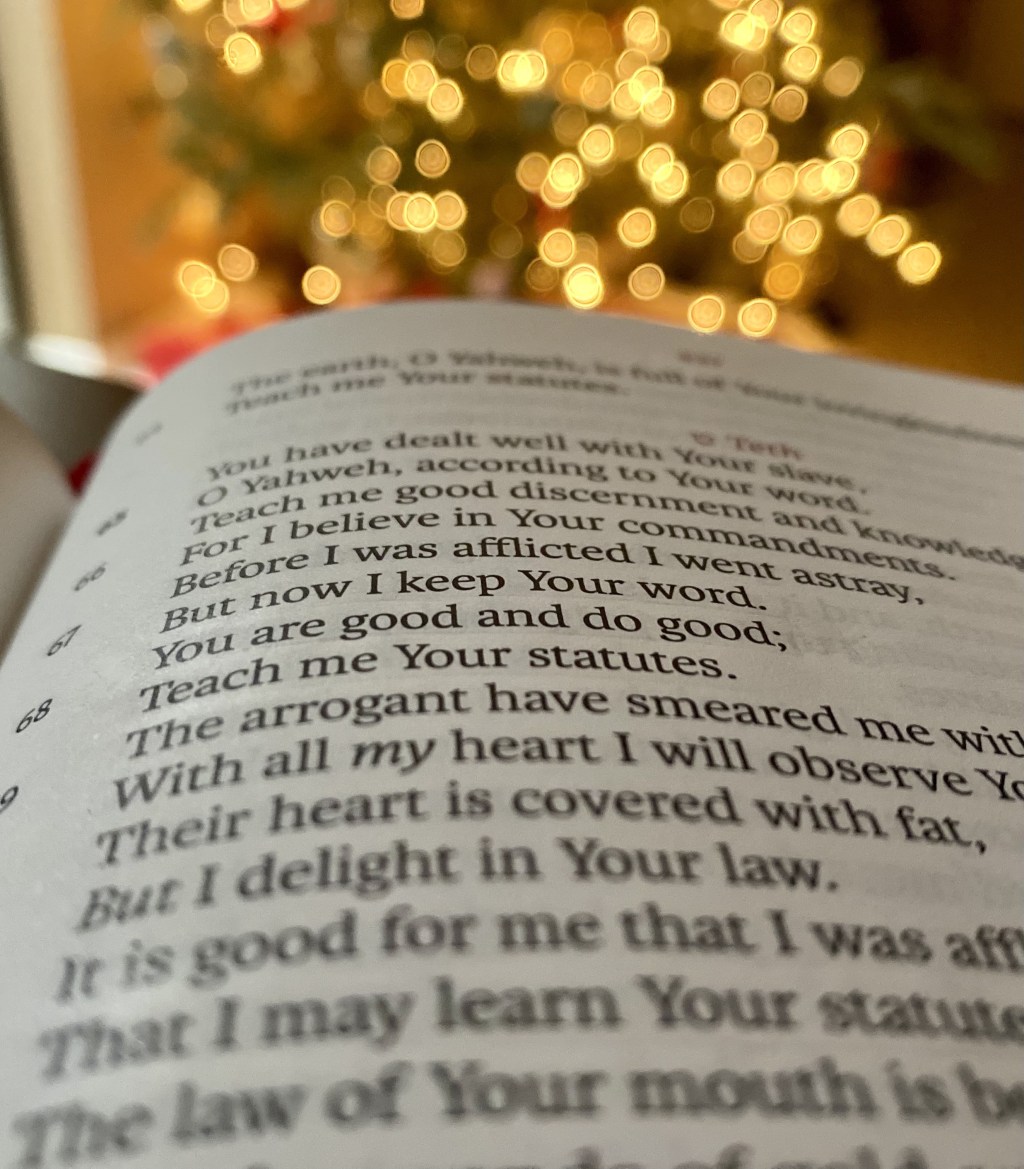
Psalm 119:68 says, “You are good and do good.” The Lord does not save babies and infants because they are innocent. I believe He does so because He is merciful. Our God has great love and mercy for His creation, especially the little ones. Jesus said “Let the children alone, and do not hinder them from coming to Me; for the kingdom of heaven belongs to such as these” (Matt. 19:14).


 1689 Brazilian
Leave a reply to Joe Reed Cancel reply